Parliament of Plants
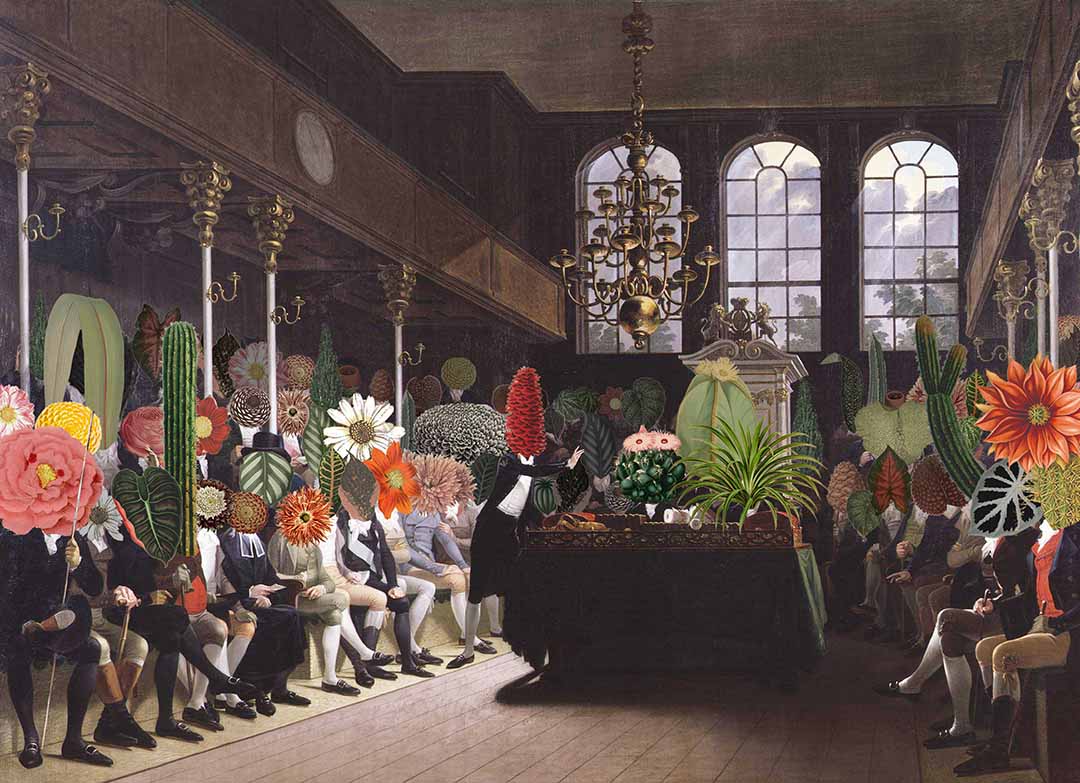
The Parliament of Plants proposes an urban environment where the wisdom of plants is highly valued for their knowledge of social and economic biotopes, as well as their deep understanding of natural processes. Woody, leafy, and flowering beings form here an hegemonic green democracy. With similar protocols to those currently used in the political arena, in this parliament of vegetation, legislators from different origins convene on a daily basis to debate current issues. Yet in contrast to the constant confrontation and tension found in “human” political contexts, this parliament of plants usually comes to a consensus and manages to come to agreements—despite having divergent views—because its members are aware of the importance of taking measures and acting decisively in areas regarding ecology, inclusion, tolerance, and diversity, with the understanding that their administration can only act towards the common good, basing their decisions on the principle of mutual care and support.
Based on The House of Commons, 1793-94, by Karl Anton Hickel
Photography: Ludger Paffrath / Vitra Design Museum
Limited artist’s proof of the “Parliament of Plants” images available. Edition of 70×50 cm, printed on Hahnemuhle Bright White 310g paper 100% cotton, signed and hand-numbered. Contact us for more information.
→ Read the inverview “Human habitats need to accommodate other living beings.” with Viviane Stappmanns, Garden Futures, 2023 (English)
→ Read “The Parliament of Plants and other Cautionary Tales, Where Stories Make Worlds and Worlds Make Stories”, by Céline Baumann in Conversation with Ethel Baraona Pohl, Solitude Journal, 2020 (English)
→ Read the review of “What is radical today?” by George Kafka for Metropolis magazine, 2019 (external link)
 Parliament of Plants


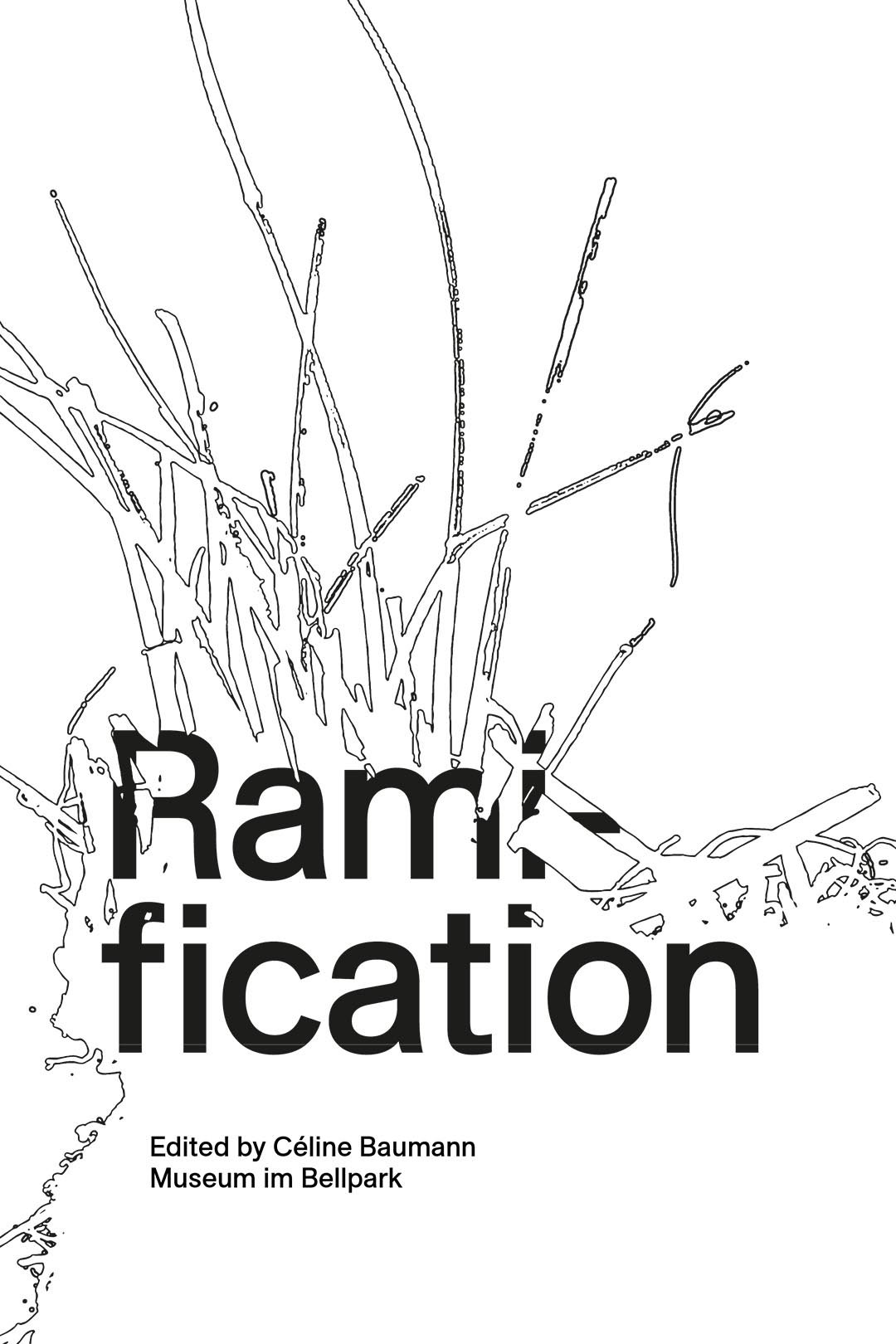
Ramification
Recipient of the Julius Posener Exhibition Catalogue Award 2026 from the International Committee of Architectural Critics CICA
We are familiar with the idea of ramification from botany: in the case of the tree, aboveground elements like limbs and twigs visibly branch out in order to enlarge the overall leaf surface and thereby maximize processes of photosynthesis. The principle of ramification can also be seen in the realm of larger systems: for example, in the case of a watershed, where small tributaries flow into ever-larger rivers before reaching the sea.
Ramifications can cover larger areas without eliminating, or pushing out, what is already there, and can thereby connect otherwise isolated entities. And ramification is also a conceptual tool that offers insight— not only into the anatomy of a plant but also onto connections within and between landscapes.
This publication presents the innovative perspectives of a select group of landscape architects, urbanists, and biologists whose practices share a forward-looking understanding of their disciplines and who have—knowingly or unknowingly—adopted the metaphor of ramification to think about landscape and make it possible, thereby, to design more sensitively and with a greater orientation toward the future.
With contributions by Céline Baumann, Jana Crepon, Julie Delnon, Georges Descombes, Hilar Stadler, and Paola Viganò. Projects by Altitude 35, Paris; Inside Outside, Amsterdam; StudioPaolaViganò, Brussels and Milan; Superpositions, Geneva; Sylvie Viollier and Cyril Verrier, Geneva; and mavo Landschaften, Zurich.
You can find the book in the following bookstores: Geneva: Fahrenheit 451, Large/Kiosk; Kriens: Museum im Bellpark; Lausanne: Basta!, Payot; Zurich: Hochparterre Bücher, Never Stop Reading; Berlin proqm
→ Buy online
→ Read pdf preview
“Human Habitats Need to Accommodate Other Living Beings”
Landscape architect Céline Baumann designs urban environments, but she also maintains a prolific practice as an artist and educator. Her Basel-based studio is committed to research on plant life and interrelations with humans. Her intersectional lens in turn informs her design work, in which she aims to create dynamic open spaces that respect the ecology of both humans and nature.
Interview by Viviane Stappmanns
→ Buy online
→ Read pdf (english)
→ Read pdf (german)