Gardens Without Boundaries: Straddling the Line Between Wild and Domesticated
Queer Flora, Fauna, and Funga is an eclectic and transdisciplinary anthology, highlighting the sexual and gender diversity in nature. Queer theory and natural history intersect through visual art and creative writing. This publication gives attention to roughly forty case studies, which inspire us to reimagine the world and our place in it. Each contribution dives into questions such as: How does acknowledging the queerness of nature inspire us to compose the world otherwise? How can we rewrite history to make a place for ourselves in the story? And what is the role of an individual in a symbiotic community? The arts, poetry, scientific and speculative writing spark this imagination, and give readers tools to shape the world differently. Queer Flora, Fauna, and Funga asks to expand our knowledge about sexual and gender diversity, and to reconsider our relationships with each other and our more- than-human companions in the natural world.
Twelve Cautionary Urban Tales
A group of contemporary practices, from different generations and a range of professional expertise have been invited to give shape to these Twelve Cautionary Urban Tales by reconceptualising the original format of Superstudio’s 12 tales and transforming the exhibition into a tool to help us rethink our role in the building of the city.
The Parliament of Plants proposes an urban environment where the wisdom of plants is highly valued, where the flora is on equal terms as the humans inhabiting the planet. Citizens have a great respect for their knowledge of social and economic biotopes, as well as their deep knowledge of natural processes. The woody, leafy, and flowering beings head the parliament since its founding, becoming the first green democracy known to the world. With similar protocols to those currently used in the legislative arena, in this parliament of vegetation, plant legislators from different origins convene on a daily basis to debate current issues. Yet in contrast to the constant confrontation and tension found in “human” political contexts, this parliament of plants usually comes to a consensus and manages to come to agreements—despite having divergent views—because its members are aware of the importance of taking measures and acting decisively in areas regarding ecology, inclusion, tolerance, and diversity, with the understanding that their administration can only act towards the common good, basing their decisions on the principle of mutual care and support.
Photography: Ángela Losa , María Eugenia Serrano & Lukasz Michalak, Estudio Perplejo / Matadero
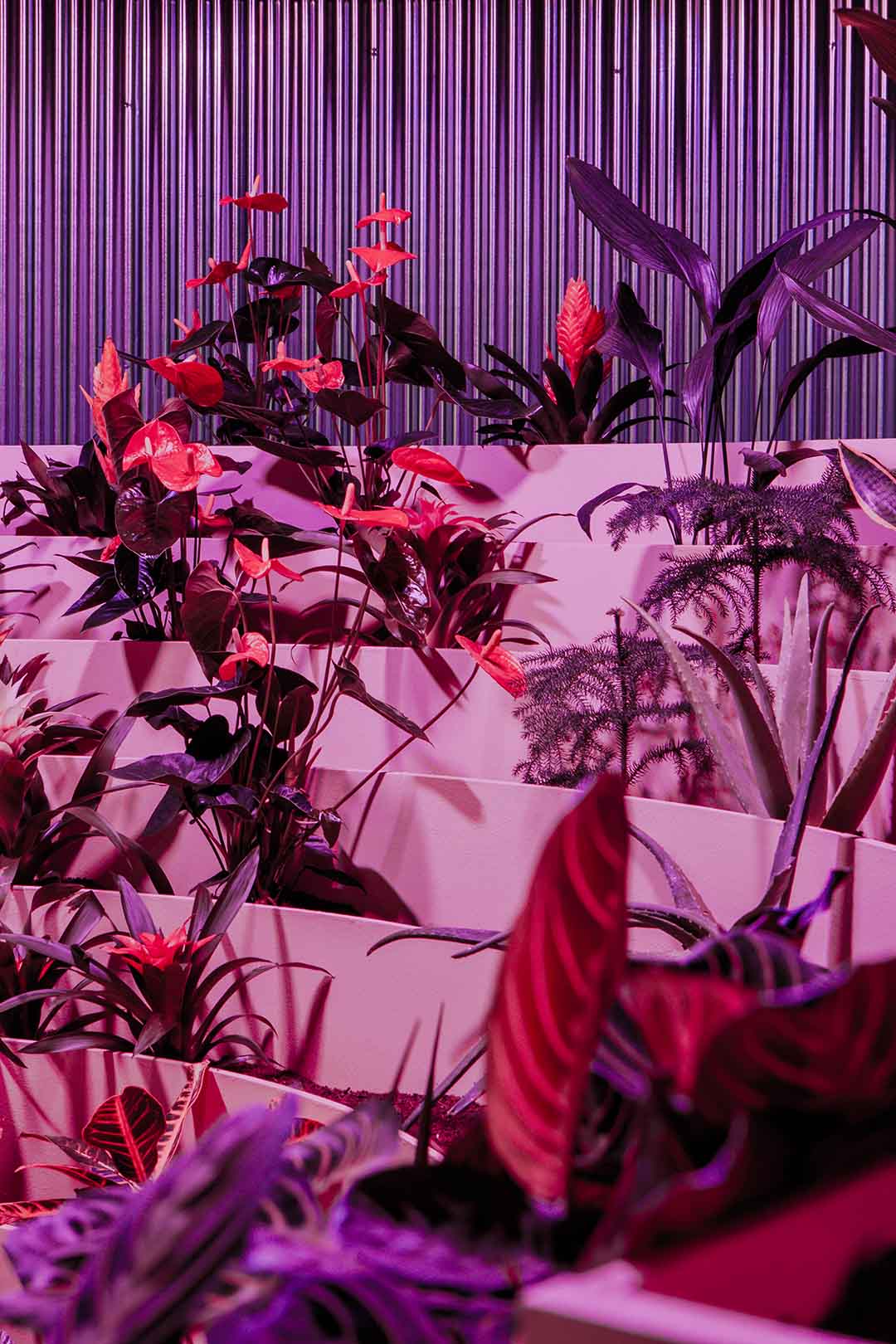 Installation, Twelve Cautionary Urban Tales, Matadero


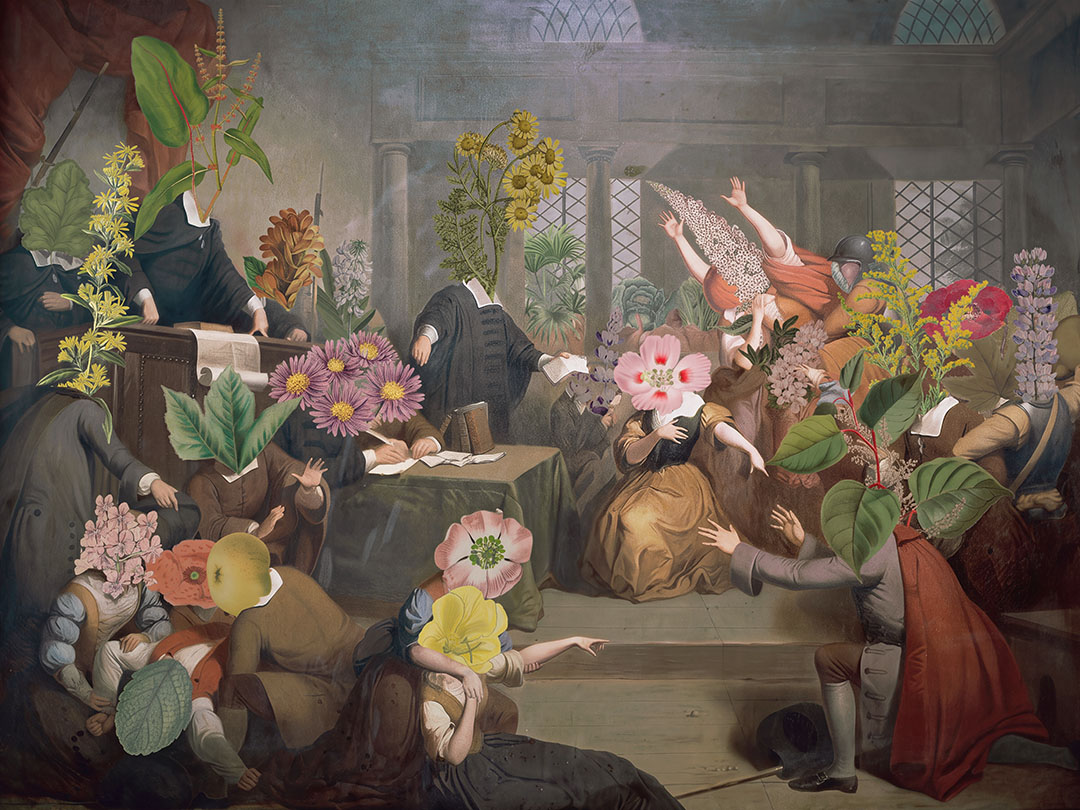
Trial of Invasives
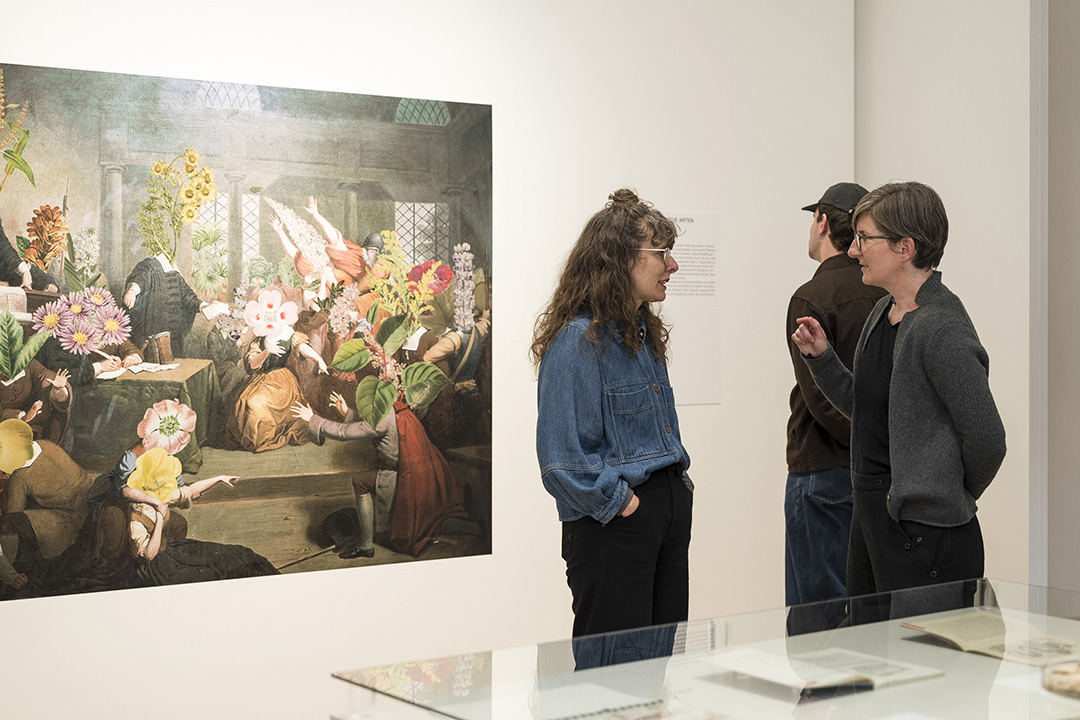
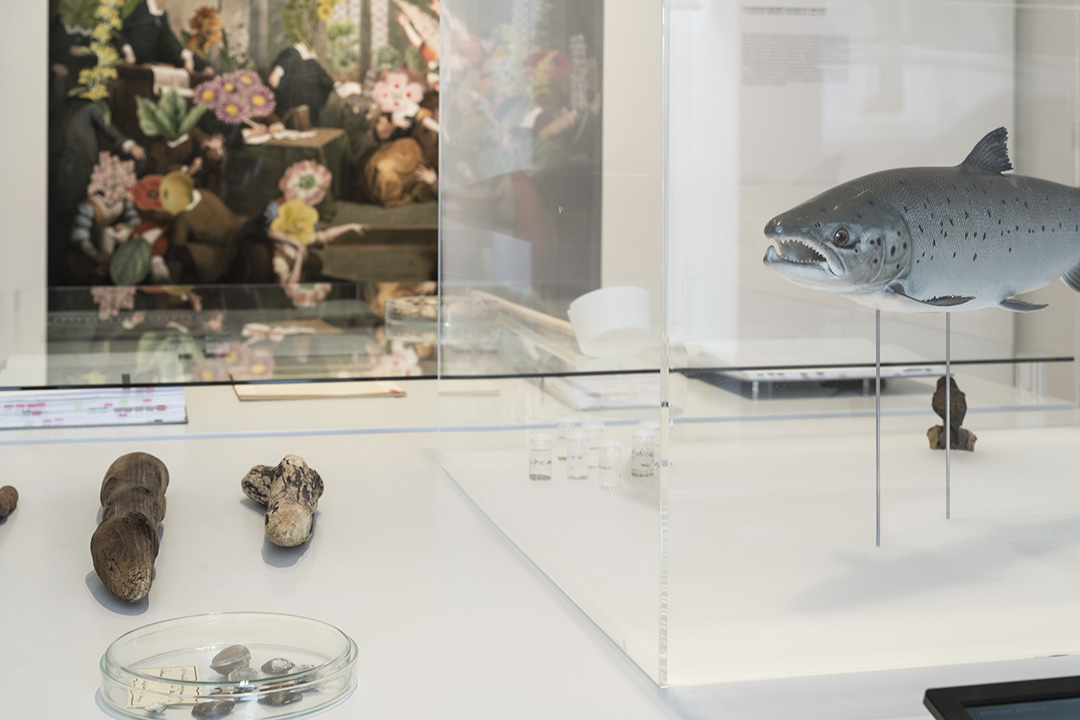
The depicted courtroom scene is rather chaotic: a pink evening primrose (Oenothera speciosa) accuses a Japanese knotweed (Reynoutria japonica) of invasion. Summer lilac (Buddleja davidii) and Canada goldenrod (Solidago canadensis) protest vehemently. On the left of the picture the broad-leaved dock (Rumex obtusifolius) judge and the common ragwort (Jacobaea vulgaris) attorney are both standing in a menacing attitude, while a mint leaf is fainting in the foreground. The crowd in the gallery background, including a Chinese windmill palm (Trachycarpus fortunei), fearfully observes the scene in silence.
Urban flora is flourishing, but this is not regarded positively by everybody: weeds are accused to damage buildings with their roots, other plants are very quickly to propagate thanks to seed dispersal or a highly resistant root network. Some of this spontaneous flora also comes from faraway locations and is labelled as “neophyte” in opposition to the local vegetation which is referred to as “endemic”. A few of those neophyte plants have indeed been very successful to develop in their new human-made habitats and have therefore been labelled as invasive. Nowadays Japanese knotweed is one of the most emblematic invasive neophytes, due to its omnipresence as well as the quasi-indestructibility of its rhizomatic system. But invasion is not a phenomenon reserved to foreign species. Indigenous plants can also become problematic in their own environment, such as the common ragwort which is a common wildflower native to Europe but often unwanted as it can be toxic to cattle and horses, or the broad-leaved dock, a hardy plant that is native to Europe but considered as highly invasive due to abundant seed dispersal, an aggressive root system, and a great adaptation to most climates. There has been in the past some examples of non-human trials, where donkeys and sows have been used as scapegoats of our own human actions. Is something similar happening today with plants?
Digital collage, Céline Baumann, 2025
Based on The Trial of George Jacobs of Salem for Withchraft, painted by Tompkins H. Matteson in 1855.
 Trial of Invasives